The New SEO Is Getting Cited by AI. So I Built a Plugin.
Search is shifting from Google’s blue links to AI answer engines. Visora is a WordPress plugin that gives non-technical owners plain, honest control over how ChatGPT, Perplexity, and Google AI read, cite, and train on their content.

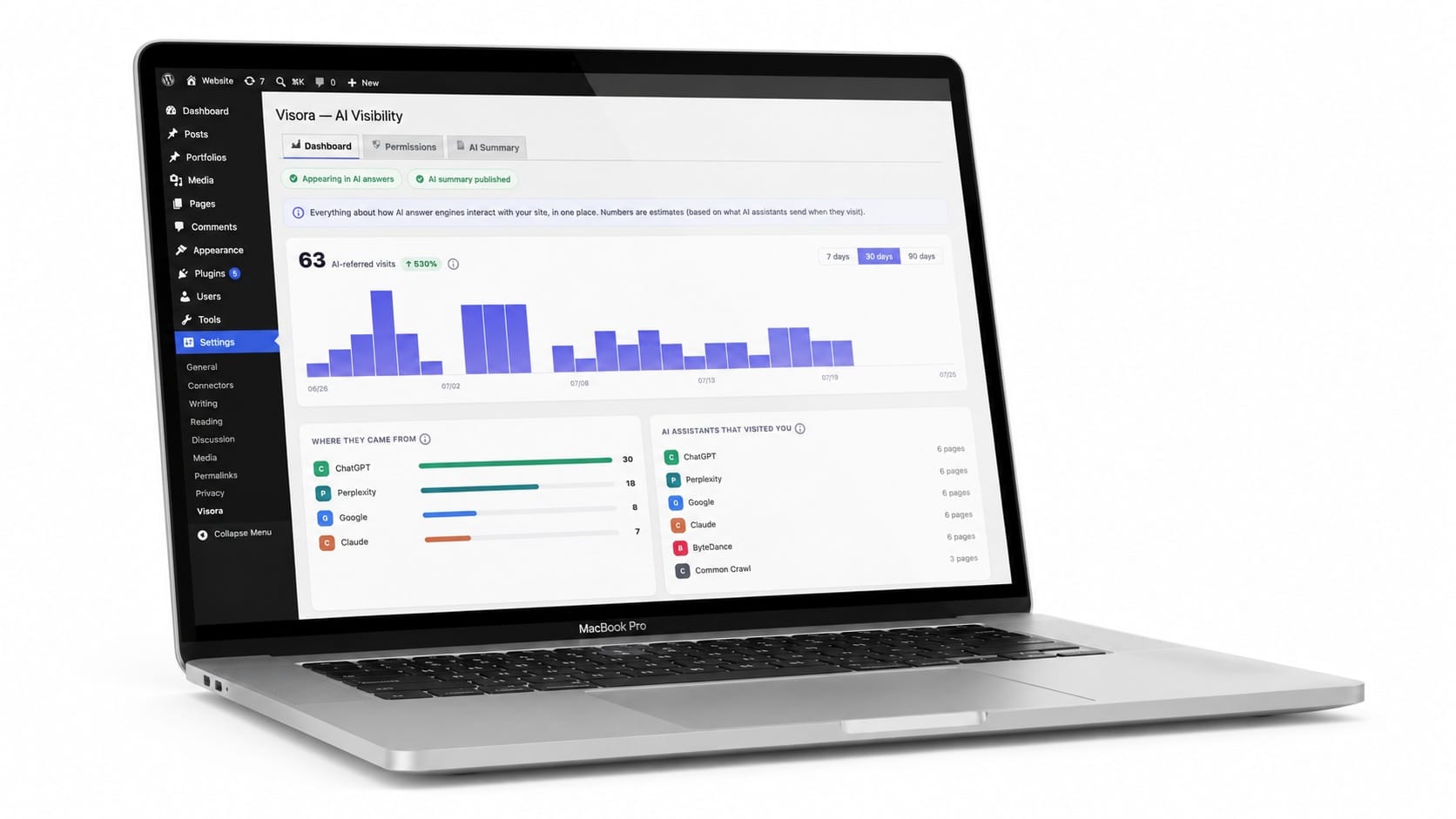
For twenty years, being found online meant ranking on Google. That's changing fast. More and more people ask ChatGPT, Perplexity, or Google's AI Overviews a question and get a finished answer back, sometimes with citations, often without ever clicking through to the source. If those engines can't read and cite your site, you're invisible in a channel that grows every month.
I wanted my WordPress sites to show up there, on my terms. So I built Visora.
THE PROBLEM
The controls that decide how AI uses your content already exist: robots.txt directives, Google-Extended, the emerging llms.txt standard. The trouble is they're scattered, technical, and buried in bad advice. Plenty of "block Google AI" tips out there would quietly wreck your Google ranking. A non-technical site owner has no clear, safe way to see what's happening, let alone change it.
WHAT IT DOES
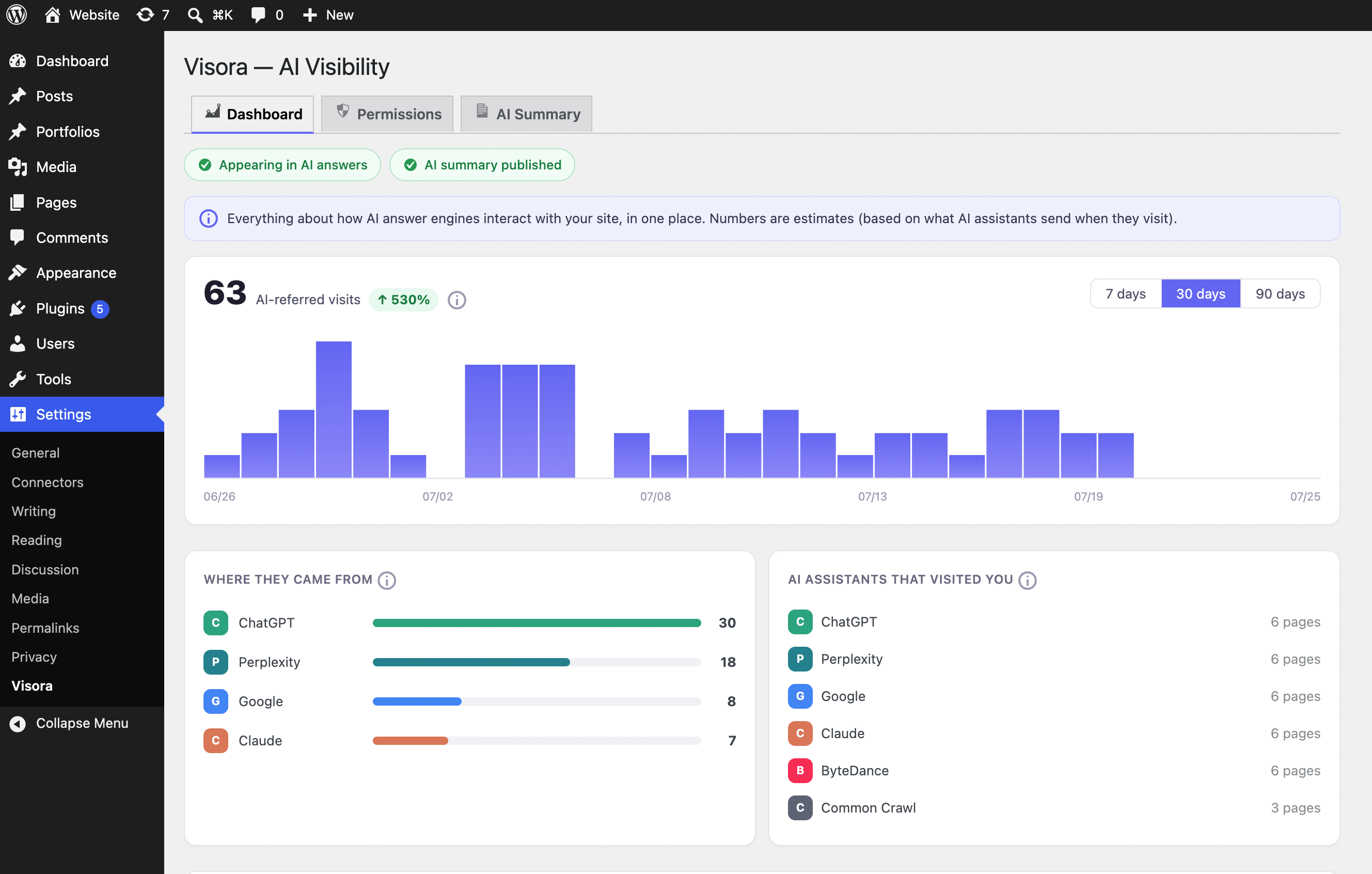
Visora gives WordPress three plain-language tools. The Dashboard shows which AI assistants visited, how that shifts over time, and which of your pages they reference most. Permissions lets you allow or block each assistant, split into two honest choices: appear in AI answers (recommended, since it brings visitors) and use my content for training (optional). AI Summary auto-generates an /llms.txt, a short machine-readable summary that helps assistants understand and cite your site correctly. One click applies sensible defaults.
HOW IT WORKS
It's deliberately self-contained. Visora makes no outbound requests. It reads the incoming request headers to spot AI crawlers, then writes the robots.txt directives and the llms.txt file on your own site. Nothing about your traffic ever leaves your server.
HONEST BY DESIGN
This is the part I care about most. robots.txt is respected by the major assistants, but it's a request, not a firewall, and the plugin says so plainly. There's no misleading "block Google AI" switch either. AI Overviews ride the normal Google crawler, so blocking it would drop you from Search. Visora only exposes Google-Extended, the training signal, clearly labeled. The traffic figures are estimates drawn from user-agents and referrers, and they're always shown as estimates, never dressed up as analytics they aren't.
WHERE IT'S GOING
The llms.txt idea and answer-engine optimization are still early and messy. The honest answer is that nobody fully controls how AI reads the web yet. Visora's job is to hand you the real levers that do exist, explain their limits, and stay out of snake-oil territory.
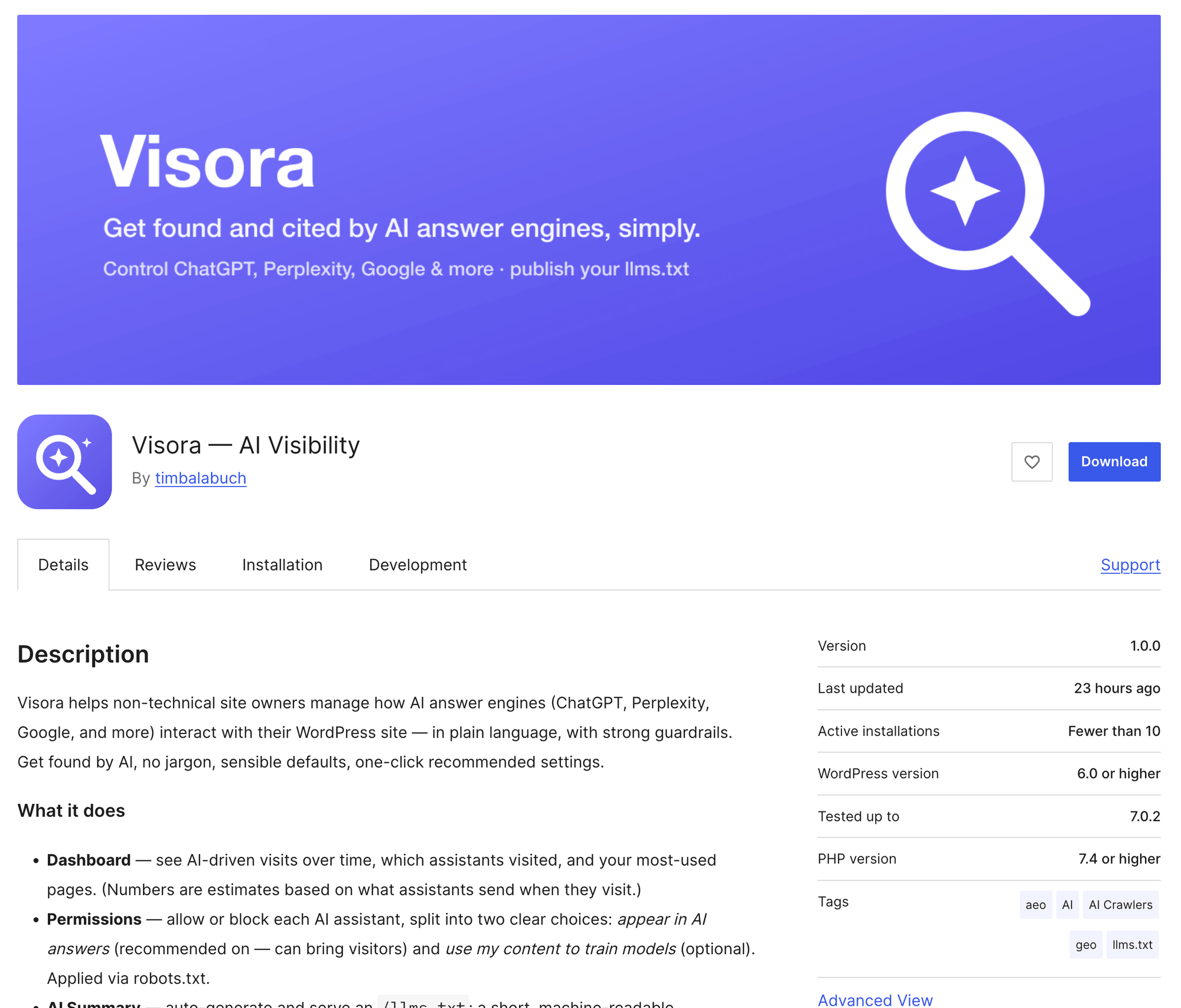
Visora is live on the WordPress Plugin Directory and open source on GitHub.